Thoughts
The System Says No. Who Can Explain Why?
· Madeleine Nicholas
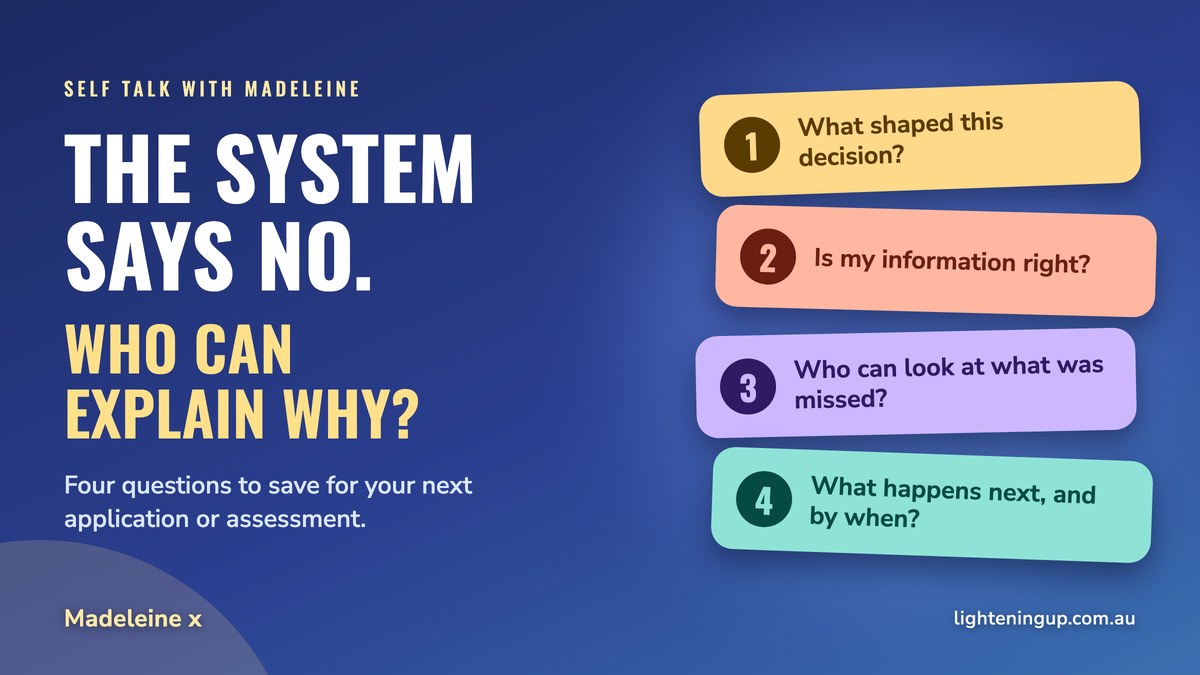
When the system says no, who can explain why?
An application comes back unsuccessful. You get a score, a category or a standard response.
But you still don’t know which part of your life shaped the outcome. Or whether something important was missed.
That is what an automated decision can feel like from the inside. A result arrives, and the reasons stay somewhere you can’t see.
Why this is getting more common
More and more services use software to sort, score or flag people before a human reads anything. Sometimes the software makes the call. Sometimes it just shapes what the person reading sees.
You don’t need to understand the software to ask how a decision about your life was reached. That part is yours to ask, every time.
The Royal Commission into the Robodebt Scheme, which reported in 2023, looked at what happens when an automated process raises debts against people without anyone checking whether it fits their life. Among its recommendations was that government should explain in plain language when automated decision making is used and how it works.
Plain explanations should be normal. Until they are, knowing what to ask helps.
Four questions to save
1. What shaped this decision?
Ask which criteria and information were used. Not “why did you say no”, which can get you a standard line. “What was it based on” is harder to dodge.
2. Does the information reflect my circumstances?
Ask how to check it, and how to request corrections. A wrong date, an old address or a missing document can quietly change an outcome. If it is wrong, you want to know now.
3. Who can consider what was missed?
Ask what human review or escalation options are available. Somebody should be able to look at your situation, not only your data.
4. What happens next, and by when?
Ask for the process, any deadline and a reference number. This one gives you something to follow up on later. Write down the name of the person who tells you.
One sentence to start with
If you only want one thing to copy and paste, use this:
This outcome doesn’t appear to reflect my circumstances. Please explain the reasons, how I can correct any inaccurate information, and what review options and deadlines apply.
It is calm, specific and polite. It also asks for four things at once, so a single reply can cover most of what you need.

What to do with the answer
Keep the reply. Put the date and the name in your promise log, so the follow up writes itself if the deadline passes.
If the answer is vague, ask again, in writing, and quote what they said. If it is a real decision with a review right, How to Challenge a Decision Without Losing Your Voice walks through the steps.
If you want to go deeper on why this matters, I wrote about it in Automated Decisions, Human Consequences.
If you have no energy for any of this
Send only the sentence above. Put the date in a note. That is a complete first move, and it puts the question on the record.
The bit that matters most
You are not being difficult by asking how a decision about your life was made. It is a fair question, and a fair system should be able to answer it.
A better system makes the explanation, and the next step, easy to find. Until then, ask. And save these four questions for your next application or assessment.
LighteningUp Navigator, coming soon, has an Explain This to Me tool for decisions that are hard to read. You check and approve everything before it goes anywhere.
Have you ever had an outcome with no explanation you could use? Share only what feels comfortable.
Madeleine x
Not sure where to start?
Take a three minute check-in, or grab the free Starter Kit.