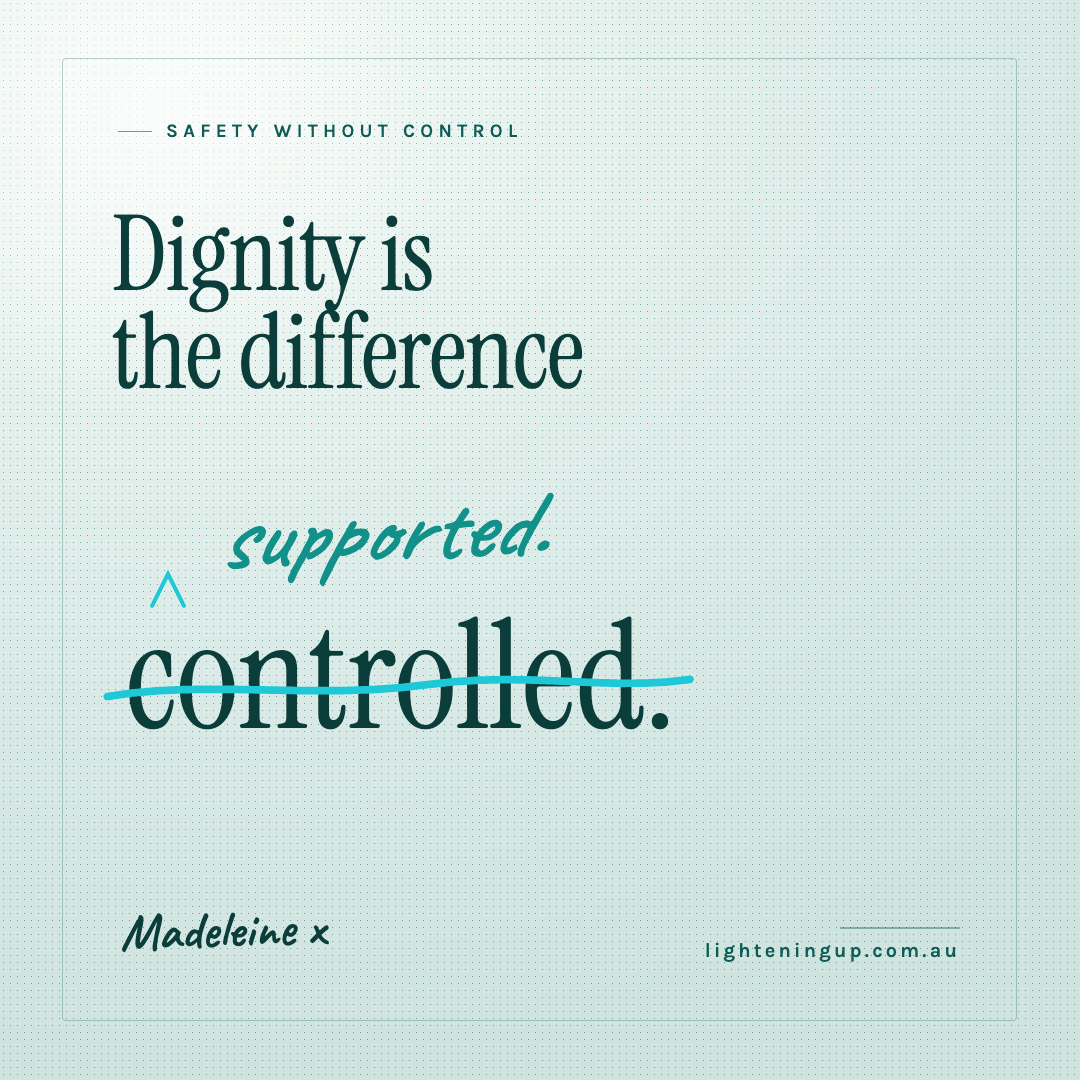
Safety Without Control: When Protection Becomes Restriction
Safety is one of those words nobody argues with. Say it, and the conversation usually stops there. But safety gets used, often by people who mean well, to justify limiting independence, relationships, privacy, and the everyday business of taking part in a community. Somewhere along the way, protection quietly turns into restriction, and it happens under a banner nobody feels able to push back against.
Support versus control
Support helps someone do the thing they want to do, more safely. Control decides the thing isn’t happening at all. They can look almost identical from the outside, a hand on the same decision, but they land completely differently on the person living it.
Helping someone plan a trip out so it goes well is support. Deciding they simply can’t go is control, dressed up as care. The difference usually comes down to one question: was the person part of deciding, or just told the outcome?
When eliminating risk goes too far
No life is risk-free, and trying to make one that way usually costs something bigger than the risk itself. A life with every risk stripped out tends to be a smaller life too, fewer relationships, fewer new things tried, fewer ordinary moments that come with even a small chance of going wrong. Risk isn’t automatically a problem to be solved. Sometimes it’s just what living looks like.
The dignity of getting things wrong
Everyone gets to make an ordinary mistake. Buy the wrong thing. Trust the wrong person for a while. Try something that doesn’t work out. That’s not a failure of judgment that needs preventing at all costs, it’s how people learn what suits them and what doesn’t. Protecting someone from every possible misstep also protects them from the chance to find their own way, and that trade isn’t as fair as it sounds.
Supported, not substituted
There’s a real difference between helping someone reach their own decision and quietly making it for them. Supported decision-making means giving someone the information, the time, and the backup they need to choose for themselves. Substituted decision-making skips straight past them and decides on their behalf, often while still calling it support. One keeps a person at the centre of their own life. The other moves them to the side of it.
Balancing duty of care with autonomy
Duty of care matters, and nobody’s arguing it away. But it has to sit alongside a person’s right to run their own life, not override it by default. That balance isn’t found once and settled forever, it gets worked out conversation by conversation, decision by decision, with the person affected actually in the room. The moment safety becomes the only consideration, it’s stopped being a balance at all.
The bit that matters most
People should not have to surrender control over their lives to be considered safe.
Real protection makes space for a person to keep choosing, even when a choice carries some risk. The version of safety that only exists by taking someone’s control away isn’t protecting them. It’s just protecting everyone else from the discomfort of watching them live their own life.
Madeleine x