Dignity Is Not an Extra: The Everyday Human Right Systems Keep Missing
A service can turn up on time, get through every task on the list, and tick every box on a form, and still leave someone feeling smaller than they did before it arrived. That gap, between support that’s delivered and support that actually respects the person receiving it, is where dignity quietly goes missing.
It’s rarely one dramatic failure. It’s a hundred small moments that add up to something a person carries long after the appointment ends.
Being spoken about, not spoken to
It happens in a heartbeat. A worker turns to a family member, or another professional, and asks “does he need help with that,” while the person it’s actually about is sitting right there, fully capable of answering for themselves. Quick, almost automatic, and it still lands as a message: your voice isn’t the one that matters here.
Dignity starts with the basics. Speak to the person. Ask them directly. Let them answer before anyone answers for them.
Coming into someone’s space without respect
A home isn’t a task site. It’s someone’s actual life, their routines, their belongings, their sense of safety. Walking in without knocking properly, moving things without asking, treating a bedroom or bathroom like the next stop on a checklist, all of it chips away at something that should never have been up for negotiation.
Respecting a space means treating it the way you’d want your own treated, every visit, not just the first one.
Rushed, task-focused support
Support delivered at speed, ticking through a list without a moment for the person underneath it, meets a need on paper while missing the point entirely. A shower given in silence. A meal handed over without a word. Care that looks efficient and feels like being processed rather than helped.
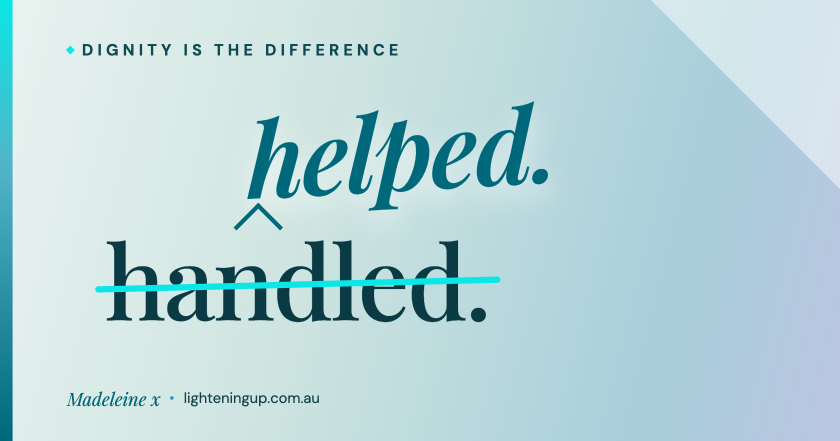
The difference between being cared for and being handled is rarely about time. It’s about whether there was room, even briefly, for the person to actually exist in that exchange.
Withholding choice in the name of safety
Safety gets used, often with good intentions, to justify taking away ordinary choices that have nothing to do with real risk. What to wear. What to eat. When to go outside. Genuine safety concerns deserve real conversations, not blanket restrictions applied because that’s simpler than working out where the actual line sits.
Taking away a choice should be the last step after a proper conversation, not the easiest way to avoid having one.
Designing dignity into everyday practice
Dignity isn’t a value written into a mission statement. It’s a set of habits built into how support actually happens. Knocking and waiting. Asking before assuming. Explaining what’s about to happen before doing it. Leaving a moment for someone to say no. None of that costs meaningful extra time. It just means treating dignity as part of the job, not a nice-to-have squeezed in if there’s time left over.
The bit that matters most
Meeting a person’s basic needs is not enough if the way those needs are met diminishes them.
A service can be technically correct and still get this wrong. Dignity isn’t an extra layered on top of good support. It’s the thing that decides whether the support was ever actually good.
Madeleine x