Linking Advocacy to Valued Roles
How does speaking up change the way people see you? Slowly, and for the better. Advocacy strengthens the social roles that matter most.
Social Role Valorisation is the idea that the roles you hold shape how people treat you. I explain it in What Social Role Valorisation Means. Advocacy is one of the most direct ways to build those roles.
The roles that matter most
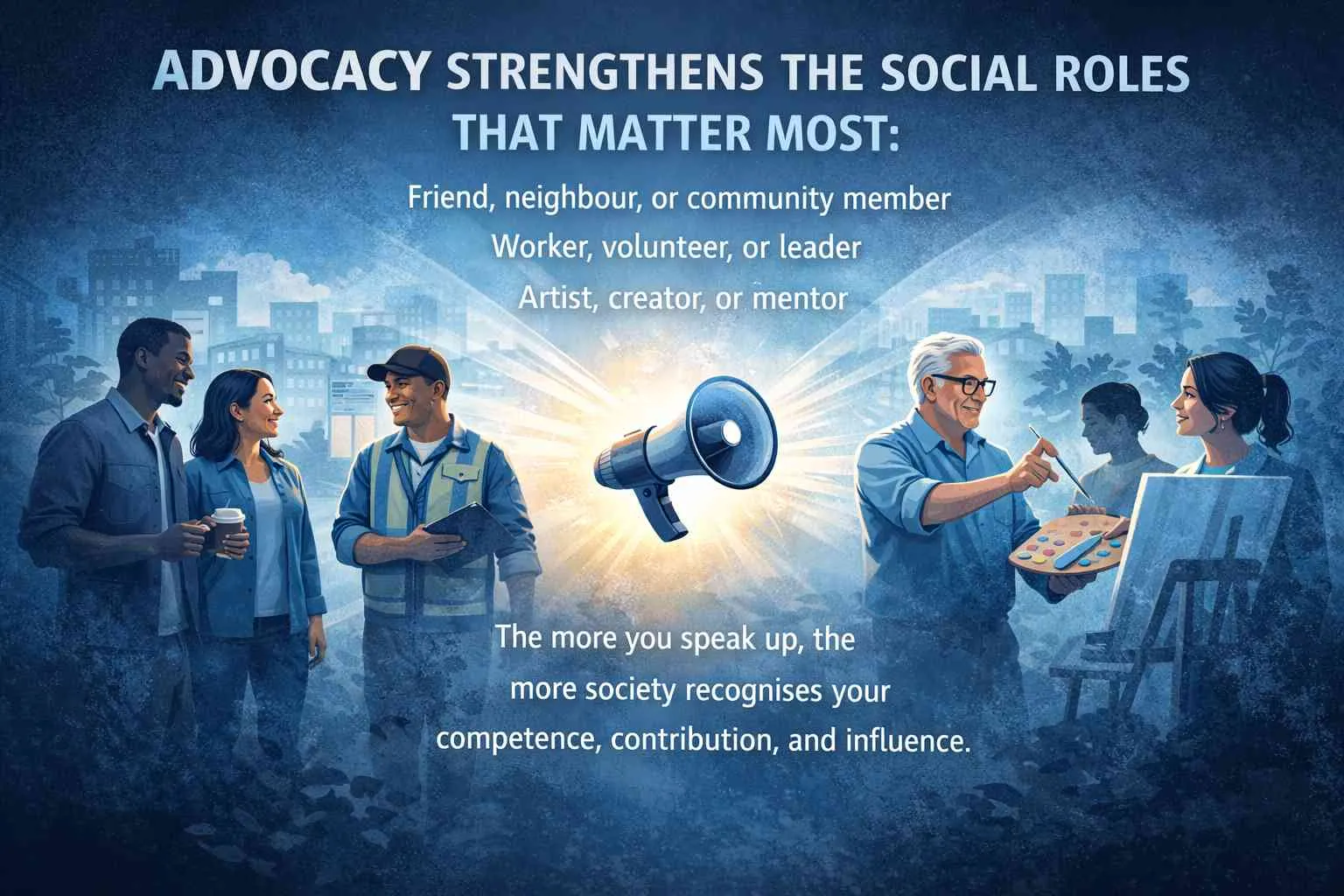
- Friend, neighbour or community member. People who know you, miss you and invite you.
- Worker, volunteer or leader. People who rely on what you do.
- Artist, creator or mentor. People who value what you make and what you share.
How advocacy builds them
Every time you ask for something clearly and it is taken seriously, people learn something about you. They see someone who knows what they want, who can contribute and who can influence what happens next.
That shift matters. When you are seen as capable, people offer you more responsibility. When you have more responsibility, you have more chances to speak up. It builds on itself.
Small examples
- Asking to be on the roster, not just attending the group
- Offering to help run an event, rather than being the person it is done for
- Sharing your opinion in a meeting and having it written in the minutes
- Teaching someone else something you are good at
Check your own situation
If you would like to see where you are, the Social Role Valorisation check in takes about three minutes and nothing is saved.
The bit that matters most
The more you speak up, the more society recognises your competence, contribution and influence.
Not sure where to start?
Take a three minute check-in, or grab the free Starter Kit.