Thoughts
Stop Creating “Special” Activities: Build Pathways Into Ordinary Community Life
· Madeleine Nicholas
Are disability only programs helping people, or holding them back? Both can be true, and it’s worth knowing which one you’re looking at.
Programs made only for disabled people can give people company, routine and support. Sometimes they’re exactly right. But when they’re the only place someone goes, they can quietly limit who that person gets to know and what they get to do.
When special programs help
A program can be a good first step. It can be a safe place to try something, meet people who understand, or get support that isn’t available anywhere else. I’m not against them.
My concern is when a program becomes the whole of someone’s week. The days are full, the person is busy and everyone feels good. Yet nobody outside the service knows them, and nobody outside the service expects anything of them.
What the numbers suggest
The Australian Institute of Health and Welfare found that in 2021, about 36% of people with disability aged 15 to 64 weren’t satisfied with their local community, compared with 25% of people without disability. Being busy inside services doesn’t seem to fix that.
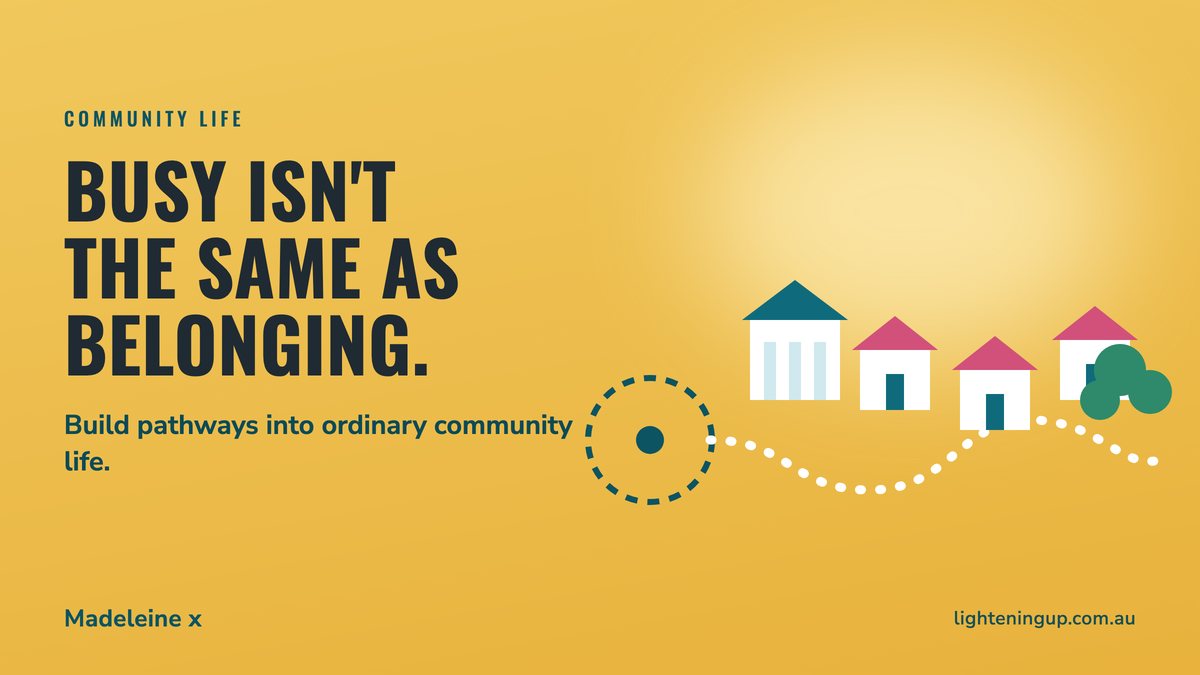
Busy isn’t the same as belonging.
Five steps towards ordinary community life
1. Start with the person, not the service. Ask what they’re interested in. Not what’s available this week, but what they actually like. Music, cars, animals, cooking, footy, gardening, history.
2. Find where that interest already lives. Most communities have a place for almost everything. A library group, a footy club, a choir, a community garden, a repair café, a men’s shed, an op shop, a walking group. Ordinary places with ordinary people who share the interest.
3. Make a warm introduction. There’s a world of difference between a request from a program and an introduction from one person to another. Go along the first time. Meet the person who runs it. Say who this is, and what they love.
4. Offer just enough support. Enough to get started and keep going, and then a bit less each time. Support should make room for relationships to grow, not stand in the way of them.
5. Look for roles, not only activities. Someone who helps set up, tends the plants or keeps the scores is part of the place. Someone who only attends is a visitor.
How to tell it’s working
Does the person know people there by name? Do they see any of them outside paid support? Would someone notice if they didn’t turn up? These are the same questions I ask in Included but Still Not Valued, and they work just as well here.
The bit that matters most
The goal isn’t to keep someone busy inside services. It’s to help them build a life beyond services.
What is one ordinary place in your community that someone you know would love?
If you’d like to look at the roles someone holds right now, the Social Role Valorisation check in is a good place to start.
Madeleine x
Not sure where to start?
Take a three minute check-in, or grab the free Starter Kit.