Thoughts
Nobody Warns You What Getting Better Actually Costs
· Madeleine Nicholas
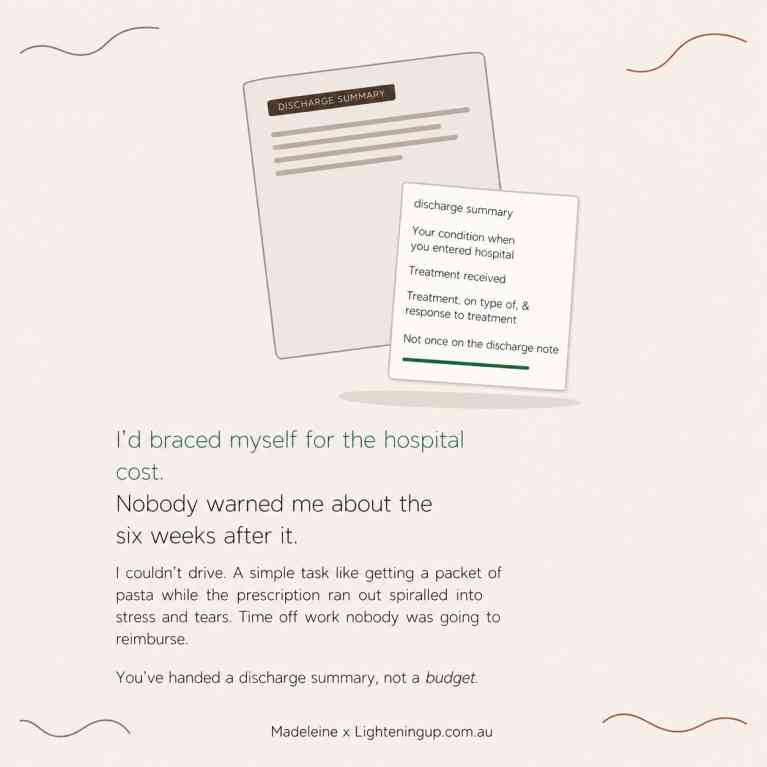
What I wasn’t prepared for was everything that came after.
The weeks of:
• Lost income.
• Extra transport costs.
• Prescriptions.
• Follow-up appointments.
• Everyday tasks becoming impossible.
• The emotional toll of trying to recover while life kept moving.
Discharge paperwork explains your medical care. It doesn’t prepare you for the financial reality of recovery.
Recovery doesn’t end when you leave the hospital and neither do the costs.
The bill that hit me after I left hospital wasn’t the surgery. It was everything that came after. Taxis because I couldn’t drive yet. A ramp I had to pay for out of pocket while the “proper” one got assessed. Time off work nobody was going to reimburse. I’d braced myself for the hospital cost. Nobody warned me about the six weeks after it.
Recovery gets talked about like it’s free once the medical part’s done. It’s not. Equipment, transport, modified housing, lost income while you can’t work the way you used to, all of it lands right after discharge, exactly when you’ve got the least energy to deal with paperwork or find extra money. The hospital bill gets treated as the expensive part. Everything after it is an afterthought, and it shouldn’t be.
That gap is where a lot of people quietly go backwards financially. Almost nobody plans for it, because almost nobody tells you it’s coming. You’re handed a discharge summary, not a budget.
Learning to ask about the hidden costs before I left the building, not after, is the one thing I’d tell anyone to do differently.
Did anyone warn you what recovery would actually cost, or did you find out the hard way like I did?
If you want to know what to ask before you’re standing in the middle of it, Self Advocacy Unleashed walks you through exactly that. Join the waitlist, link in bio.
Madeleine x