Thoughts
Nobody Should Be Discharged at 4pm on a Friday
· Madeleine Nicholas
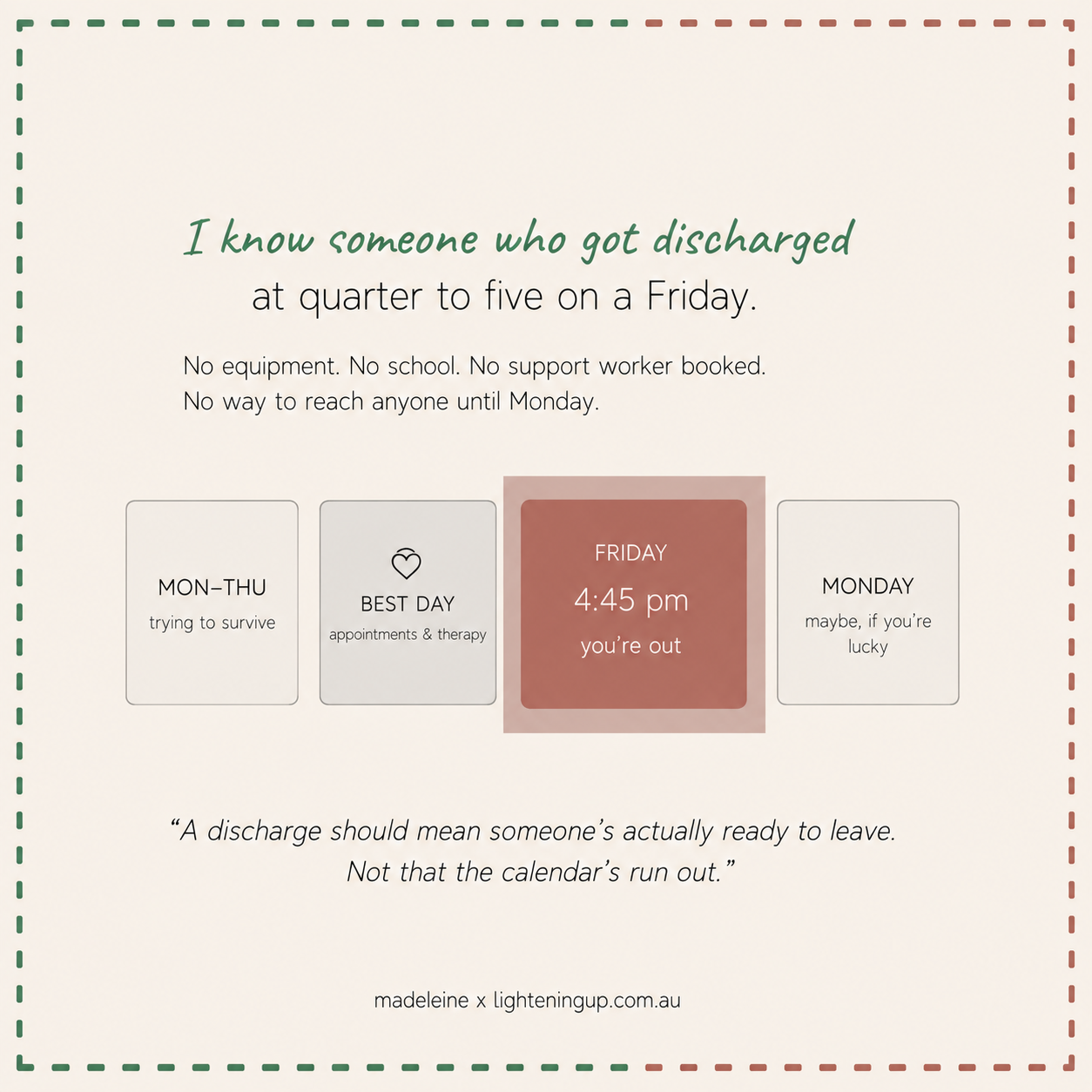
No equipment.
No support worker booked.
No way to reach anyone until Monday.
On paper, they were ready to leave hospital.
In reality, they were sent home just before the weekend with essential supports still missing and no one available to help.
Discharge should be based on whether someone is genuinely ready and safely supported—not whether the working week is over.
When services close for the weekend, people don’t stop needing care.
A discharge isn’t successful because a bed becomes available. It’s successful when the person leaving hospital has what they need to recover safely.
💚 Have you or someone you know experienced a discharge that felt rushed because of timing rather than readiness?
I know someone who got discharged from hospital at quarter to five on a Friday. No equipment sorted. No support worker booked. No way to reach anyone until Monday. She spent the whole weekend in a chair she wasn’t even supposed to be in, waiting.
Anyone who’s worked in the sector will recognise this pattern instantly. Beds need freeing up before the weekend. Paperwork needs closing out before staff clock off. So people get sent out the door on a Friday afternoon into a system that has, quite literally, switched itself off until Monday morning. The hospital’s problem is solved. The person’s problem is just starting.
What gets me is that everyone involved usually knows this is happening. It’s not some hidden failure. It’s a known one, repeated every single week, because fixing it properly would mean changing how a whole system schedules its work, and that’s harder than just sending someone home a day early.
A discharge should mean someone’s actually ready to leave. Not that the calendar’s run out.
Has a system ever handed you off right before the point where you’d need help the most?
If you’ve ever been left to manage a gap a system created, Self Advocacy Unleashed can help you build the plan that fills it before it happens again. Join the waitlist, link in bio.
Madeleine x