Thoughts
Beyond the Disability Story: Who Gets to Shape a Person’s Identity?
· Madeleine Nicholas
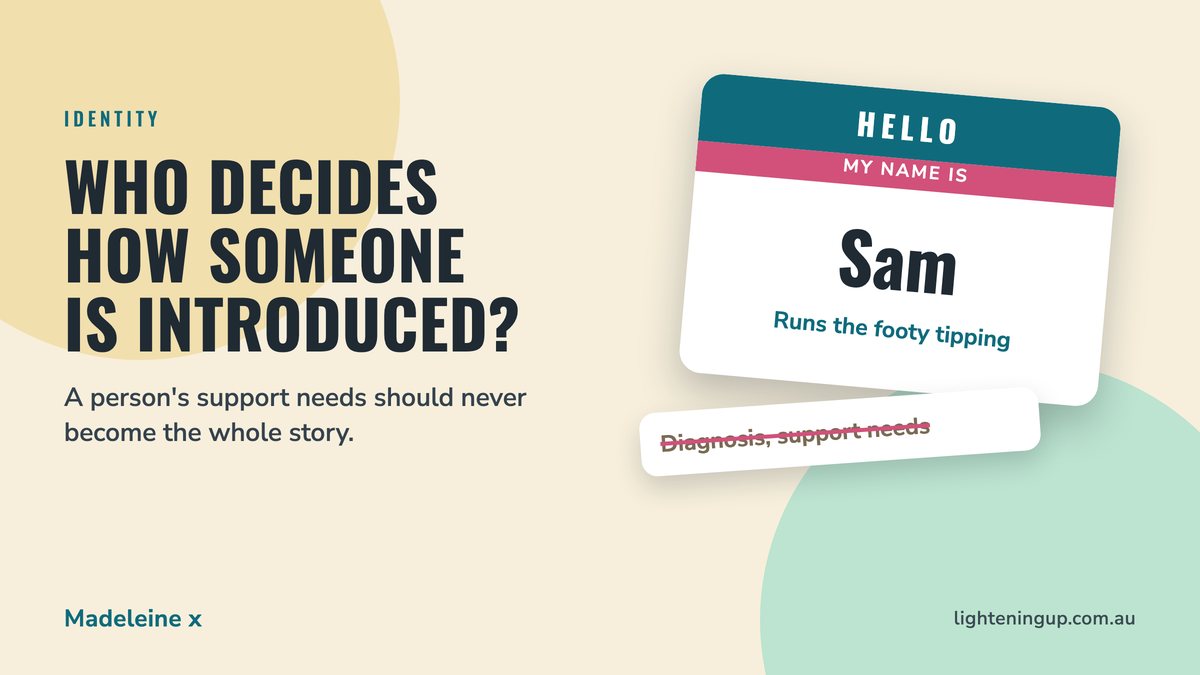
Who decides how a person is described? Far too often it’s the service, not the person.
Ask a service to introduce someone and listen to what comes first. Often it’s the diagnosis. Then the support needs. Then, if there’s time, a hobby.
That order matters. When a label leads, it becomes the person’s public identity, and it shapes everything that comes after.
Why the order of an introduction matters
When people hear the diagnosis first, they stop asking what the person likes, what they’re good at or what they want. They start asking what the person needs. The conversation shifts from getting to know someone to managing them.
The UN Convention on the Rights of Persons with Disabilities takes this seriously. Article 8 says governments must work to combat stereotypes, prejudices and harmful practices, and to promote awareness of the capabilities and contributions of persons with disabilities. That includes how we talk about people every day, not just in campaigns.
Support information is not an identity
Support information is useful. It tells people how to help. But it’s not who a person is. A support plan explains what assistance someone needs. It was never meant to be their biography.
I notice the difference in how people get described. “She’s a keen gardener who needs help with transport” is a different person from “a woman with high support needs in a gardening program”. Same facts, different roles. One is a gardener. The other is a client.
Three ways to shift the story
- Lead with an interest, a skill or a role. Something like, “This is Sam, who runs our footy tipping.”
- Keep support information for the people who need it to help. It doesn’t need to travel ahead of the person into every room.
- Let the person choose their own words wherever they can. Ask how they’d like to be introduced, and use that.
More than one role
Most of us hold lots of roles at once. Sibling, neighbour, fan, mentor, friend, someone’s favourite cook. The more valued roles a person has, the less one label can define them.
If someone only has roles inside services, that’s worth noticing. It usually means the world outside hasn’t been offered to them yet. I’ve written about how roles and advocacy connect in Linking Advocacy to Valued Roles.
The bit that matters most
A person’s support needs may explain what help they need. They should never become the whole story of who they are.
So who decides how someone is introduced in your life, or in the life of someone you support? And what would they like to be known for first?
Madeleine x
Not sure where to start?
Take a three minute check-in, or grab the free Starter Kit.